Buy home-trading.com ?
We are moving the project
home-trading.com .
Are you interested in purchasing the domain
home-trading.com ?
domain@kv-gmbh.de · 0541-91531010
Buy home-trading.com ?
Is it worth investing in Ukraine's war bonds?
Investing in Ukraine's war bonds can be a way to show support for the country during its conflict with Russia, but it also comes with risks. The situation in Ukraine is volatile and the outcome of the conflict is uncertain, which could affect the value of the bonds. Additionally, there may be concerns about the stability of the Ukrainian economy and the government's ability to repay the bonds. Therefore, investing in Ukraine's war bonds should be carefully considered and individuals should weigh the potential risks and rewards before making a decision. **
How does investing in bonds differ from investing in a bank account?
Investing in bonds involves purchasing debt securities issued by governments or corporations, which pay a fixed interest rate over a specified period of time. In contrast, investing in a bank account typically involves depositing money into a savings or checking account, where it earns a variable interest rate set by the bank. Bonds generally offer higher potential returns than bank accounts, but they also carry a higher level of risk. Additionally, bonds have a maturity date, while bank accounts provide more immediate access to funds. **

Similar search terms for Bonds
Top-Angebote
Products related to Bonds:
-
Matrix Instacure Build-A-Bond Mighty Bonds Shampoo 300ml & Instacure BStock up and save with this Matrix Instacure Build-A-Bond Mighty Bonds Shampoo 300ml & Instacure Build-A-Bond Mighty Care Conditioner 300ml Duo! Healthy hair starts from within, and this Matrix Instacure Build-A-Bond Mighty Bonds Shampoo and Conditioner gets straight to work to repair your hair. The luxuriously textured shampoo forms a rich lather and gets to work immediately on mega damaged hair and the luxuriously creamy conditioner gets straight to work with key ingredient Squalane, which works on the hairs surface to soften and smooth each strand for a silky finish! Both are infused with citric acid, this conditioner penetrates deep into the hair fiber to strengthen and reinforce damaged hair strands from within. Ingredients: Shampoo: aqua / water / eau, decyl glucoside, sodium cocoyl isethionate, cocamidopropyl betaine, citric acid, sodium hydroxide, panthenol, parfum / fragrance, glycerin, dimethicone, peg-150 distearate, ppg-5-ceteth-20, sodium benzoate, sodium chloride, peg-55 propylene glycol oleate, propylene glycol, carbomer, limonene, coco-caprylate/caprate, polyquaternium-67, salicylic acid, amodimethicone, sodium phytate, glycol distearate, squalane, coco-betaine, linalool, acrylates/beheneth-25 methacrylate copolymer, citronellol, trideceth-6, benzyl alcohol, alcohol, cetrimonium chloride, ci 17200 / red 33 Conditioner: aqua / water / eau, cetearyl alcohol, propylene glycol, behentrimonium chloride, glycerin, cetyl esters, dimethicone, peg/ppg-4/12 dimethicone, amodimethicone, parfum / fragrance, isopropyl alcohol, dicetyldimonium chloride, citric acid, phenoxyethanol, limonene, isopropyl myristate, hydroxypropyl guar, squalane, linalool, trideceth-10, coco-betaine, citronellol, cetrimonium chloride, peg-100 stearate, steareth-6, sodium chloride, benzyl alcohol, trideceth-3, acetic acid, trisodium hedta, pentaerythrityl tetra-di-t-butyl hydroxyhydrocinnamate, ci 17200 / red 3324,16 £*Shipping: 0,00 £Secure redirect to the provider
-
Inspired Finds Eternal Bonds Personalized Acrylic Photo Frame & Custom Couple Plaque Gift warm LightCapture Your Timeless Connection. Turn your most meaningful moments into a lasting keepsake with this elegant personalized acrylic photo frame. Designed specifically for couples who value memories that matter, this sleek, transparent display piece...110,99 $*Shipping: 0,00 $Secure redirect to the provider
-
Plata Publishing Rich Dad's Guide to Investing: What the Rich Invest In by Robert T. Kiyosaki - Paperback Personal Finance & Investing BookRich Dad's Guide to Investing: What the Rich Invest In is Robert T. Kiyosaki's essential companion to Rich Dad Poor Dad. This book takes readers deeper into the mindset and mechanics of building real wealth, focusing on active investing and how ordinary people can adopt the habits of the wealthy to escape the paycheck cycle. At the heart of this book is a simple but powerful distinction: passive investing versus active investing. Kiyosaki argues that true financial freedom comes from becoming an engaged investor who takes control of their financial future. This paperback is a valuable resource for anyone ready to move beyond saving and into investing, whether a beginner or someone already dabbling in stocks and property. Published by Plata Publishing, this book is aimed at adults and is a great companion to Rich Dad Poor Dad.10,99 £*Shipping: 2,99 £Secure redirect to the provider
-
Harriman House Stop Waiting, Start Investing by Ryan King - Paperback Investing Guide - Build Wealth With 10 Minutes Of Work - Personal Finance BookBuild wealth with just 10 minutes of work a day using the stock market with this practical guide. Written by finance content creator and chartered accountant Ryan King, the book offers a simple, passive, automated approach to investing that fits around a busy life. Whether you're starting from scratch or refining an existing strategy, you'll be given the tools and confidence to take control of your financial future. This book directly addresses common hesitations about investing, guiding you step by step through the fundamentals of stock market investing in clear, accessible language. Ryan King draws on his own experience and expertise to provide a beginner-friendly guide to building long-term wealth.11,99 £*Shipping: 2,99 £Secure redirect to the provider




-
What are the differences between covalent bonds, metallic bonds, and ionic bonds?
Covalent bonds are formed when two atoms share electrons, resulting in a strong bond between the atoms. Metallic bonds occur between metal atoms, where the electrons are delocalized and free to move throughout the structure, creating a strong bond. Ionic bonds are formed between a metal and a nonmetal, where one atom transfers electrons to the other, resulting in the formation of positively and negatively charged ions that are attracted to each other. Overall, covalent bonds involve electron sharing, metallic bonds involve electron delocalization, and ionic bonds involve electron transfer. **
-
Do CO bonds form with other CO bonds?
No, CO bonds do not typically form with other CO bonds. Carbon monoxide (CO) is a stable molecule with a triple bond between the carbon and oxygen atoms. This triple bond is strong and does not readily form additional bonds with other CO molecules. Instead, CO molecules tend to interact with other types of molecules through various types of chemical reactions. **
-
Why are intermolecular bonds weaker than electron pair bonds?
Intermolecular bonds are weaker than electron pair bonds because they involve interactions between molecules rather than within a single molecule. In intermolecular bonds, the attractive forces between molecules are generally weaker than the covalent bonds that hold atoms together within a molecule. Additionally, intermolecular bonds are typically temporary and can be easily broken, whereas electron pair bonds are strong and stable. Overall, the weaker nature of intermolecular bonds allows molecules to move and interact with each other more freely. **
-
Why are intermolecular bonds generally weaker than covalent bonds?
Intermolecular bonds are generally weaker than covalent bonds because they involve interactions between molecules rather than within a single molecule. Covalent bonds involve the sharing of electrons between atoms, creating strong bonds within a molecule. In contrast, intermolecular bonds, such as hydrogen bonds or van der Waals forces, are weaker because they are based on temporary interactions between molecules, which can be easily broken. Additionally, intermolecular bonds are influenced by factors such as distance and orientation, further contributing to their weaker nature compared to covalent bonds. **


Why are intermolecular bonds typically weaker than covalent bonds?
Intermolecular bonds are typically weaker than covalent bonds because they involve interactions between molecules rather than within a single molecule. In intermolecular bonds, the attractive forces between molecules, such as van der Waals forces or hydrogen bonding, are weaker than the strong sharing of electrons in covalent bonds. Additionally, intermolecular bonds are more easily broken or disrupted by changes in temperature or pressure, leading to lower bond energies compared to covalent bonds. **
Why are intermolecular bonds generally weaker than electron pair bonds?
Intermolecular bonds are generally weaker than electron pair bonds because they involve interactions between molecules, which are larger and less localized than the interactions between atoms in a covalent bond. In intermolecular bonds, the attractive forces are typically weaker due to the larger distance between molecules and the lack of direct sharing of electrons. In contrast, electron pair bonds involve the sharing of electrons between atoms, leading to stronger and more localized bonding interactions. **
Top-Angebote
Products related to Bonds:
-
milk_shake Everlasting Bonds Leave In Treatment 100mLA hair-care product. It a lightweight leave-in treatment designed to enhance your hair's softness, shine, and manageability without adding weight. This innovative formula provides heat protection up to 230°C, making it ideal for styling while addressing hair damage and promoting a healthier appearance.31,61 £*Shipping: 5,28 £Secure redirect to the provider
-
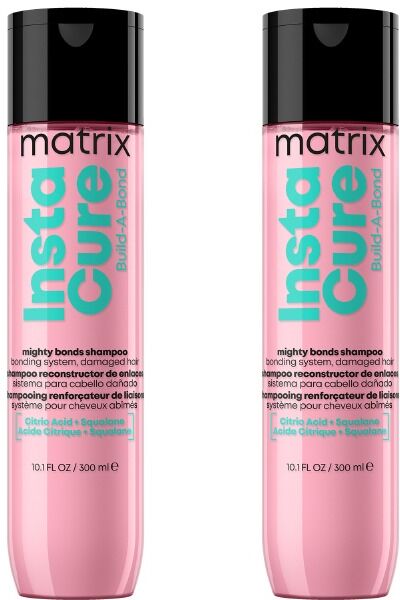
Matrix Instacure Build-A-Bond Mighty Bonds Shampoo 300ml DoubleStock up and save on professional results at home with this double Matrix Instacure Build-A-Bond Mighty Bonds Shampoo! (Includes 2 x 300ml Shampoo) Healthy hair starts from within, and this Matrix Instacure Build-A-Bond Mighty Bonds Shampoo gets straight to work This luxuriously textured shampoo forms a rich lather and gets to work immediately on mega damaged hair. Key ingredients include Citric acid, which penetrates deep into the hair fiber to strengthen and repair your hair from within. It's also infused with Squalane, which works on the hair's surface to soften and smooth every strand! Ingredients: AQUA / WATER / EAU, DECYL GLUCOSIDE, SODIUM COCOYL ISETHIONATE, COCAMIDOPROPYL BETAINE, CITRIC ACID, SODIUM HYDROXIDE, PANTHENOL, PARFUM / FRAGRANCE, GLYCERIN, DIMETHICONE, PEG-150 DISTEARATE, PPG-5-CETETH-20, SODIUM BENZOATE, SODIUM CHLORIDE, PEG-55 PROPYLENE GLYCOL OLEATE, PROPYLENE GLYCOL, CARBOMER, LIMONENE, COCO-CAPRYLATE/CAPRATE, POLYQUATERNIUM-67, SALICYLIC ACID, AMODIMETHICONE, SODIUM PHYTATE, GLYCOL DISTEARATE, SQUALANE, COCO-BETAINE, LINALOOL, ACRYLATES/BEHENETH-25 METHACRYLATE COPOLYMER, CITRONELLOL, TRIDECETH-6, BENZYL ALCOHOL, ALCOHOL, CETRIMONIUM CHLORIDE, CI 17200 / RED 3324,16 £*Shipping: 0,00 £Secure redirect to the provider
-
Matrix Instacure Build-A-Bond Mighty Bonds Shampoo 300ml & Instacure BStock up and save with this Matrix Instacure Build-A-Bond Mighty Bonds Shampoo 300ml & Instacure Build-A-Bond Mighty Care Conditioner 300ml Duo! Healthy hair starts from within, and this Matrix Instacure Build-A-Bond Mighty Bonds Shampoo and Conditioner gets straight to work to repair your hair. The luxuriously textured shampoo forms a rich lather and gets to work immediately on mega damaged hair and the luxuriously creamy conditioner gets straight to work with key ingredient Squalane, which works on the hairs surface to soften and smooth each strand for a silky finish! Both are infused with citric acid, this conditioner penetrates deep into the hair fiber to strengthen and reinforce damaged hair strands from within. Ingredients: Shampoo: aqua / water / eau, decyl glucoside, sodium cocoyl isethionate, cocamidopropyl betaine, citric acid, sodium hydroxide, panthenol, parfum / fragrance, glycerin, dimethicone, peg-150 distearate, ppg-5-ceteth-20, sodium benzoate, sodium chloride, peg-55 propylene glycol oleate, propylene glycol, carbomer, limonene, coco-caprylate/caprate, polyquaternium-67, salicylic acid, amodimethicone, sodium phytate, glycol distearate, squalane, coco-betaine, linalool, acrylates/beheneth-25 methacrylate copolymer, citronellol, trideceth-6, benzyl alcohol, alcohol, cetrimonium chloride, ci 17200 / red 33 Conditioner: aqua / water / eau, cetearyl alcohol, propylene glycol, behentrimonium chloride, glycerin, cetyl esters, dimethicone, peg/ppg-4/12 dimethicone, amodimethicone, parfum / fragrance, isopropyl alcohol, dicetyldimonium chloride, citric acid, phenoxyethanol, limonene, isopropyl myristate, hydroxypropyl guar, squalane, linalool, trideceth-10, coco-betaine, citronellol, cetrimonium chloride, peg-100 stearate, steareth-6, sodium chloride, benzyl alcohol, trideceth-3, acetic acid, trisodium hedta, pentaerythrityl tetra-di-t-butyl hydroxyhydrocinnamate, ci 17200 / red 3324,16 £*Shipping: 0,00 £Secure redirect to the provider
-
Inspired Finds Eternal Bonds Personalized Acrylic Photo Frame & Custom Couple Plaque Gift warm LightCapture Your Timeless Connection. Turn your most meaningful moments into a lasting keepsake with this elegant personalized acrylic photo frame. Designed specifically for couples who value memories that matter, this sleek, transparent display piece...110,99 $*Shipping: 0,00 $Secure redirect to the provider
-
Is it worth investing in Ukraine's war bonds?
Investing in Ukraine's war bonds can be a way to show support for the country during its conflict with Russia, but it also comes with risks. The situation in Ukraine is volatile and the outcome of the conflict is uncertain, which could affect the value of the bonds. Additionally, there may be concerns about the stability of the Ukrainian economy and the government's ability to repay the bonds. Therefore, investing in Ukraine's war bonds should be carefully considered and individuals should weigh the potential risks and rewards before making a decision. **
-
How does investing in bonds differ from investing in a bank account?
Investing in bonds involves purchasing debt securities issued by governments or corporations, which pay a fixed interest rate over a specified period of time. In contrast, investing in a bank account typically involves depositing money into a savings or checking account, where it earns a variable interest rate set by the bank. Bonds generally offer higher potential returns than bank accounts, but they also carry a higher level of risk. Additionally, bonds have a maturity date, while bank accounts provide more immediate access to funds. **
-
What are the differences between covalent bonds, metallic bonds, and ionic bonds?
Covalent bonds are formed when two atoms share electrons, resulting in a strong bond between the atoms. Metallic bonds occur between metal atoms, where the electrons are delocalized and free to move throughout the structure, creating a strong bond. Ionic bonds are formed between a metal and a nonmetal, where one atom transfers electrons to the other, resulting in the formation of positively and negatively charged ions that are attracted to each other. Overall, covalent bonds involve electron sharing, metallic bonds involve electron delocalization, and ionic bonds involve electron transfer. **
-
Do CO bonds form with other CO bonds?
No, CO bonds do not typically form with other CO bonds. Carbon monoxide (CO) is a stable molecule with a triple bond between the carbon and oxygen atoms. This triple bond is strong and does not readily form additional bonds with other CO molecules. Instead, CO molecules tend to interact with other types of molecules through various types of chemical reactions. **
Similar search terms for Bonds
-
Plata Publishing Rich Dad's Guide to Investing: What the Rich Invest In by Robert T. Kiyosaki - Paperback Personal Finance & Investing BookRich Dad's Guide to Investing: What the Rich Invest In is Robert T. Kiyosaki's essential companion to Rich Dad Poor Dad. This book takes readers deeper into the mindset and mechanics of building real wealth, focusing on active investing and how ordinary people can adopt the habits of the wealthy to escape the paycheck cycle. At the heart of this book is a simple but powerful distinction: passive investing versus active investing. Kiyosaki argues that true financial freedom comes from becoming an engaged investor who takes control of their financial future. This paperback is a valuable resource for anyone ready to move beyond saving and into investing, whether a beginner or someone already dabbling in stocks and property. Published by Plata Publishing, this book is aimed at adults and is a great companion to Rich Dad Poor Dad.10,99 £*Shipping: 2,99 £Secure redirect to the provider
-
Harriman House Stop Waiting, Start Investing by Ryan King - Paperback Investing Guide - Build Wealth With 10 Minutes Of Work - Personal Finance BookBuild wealth with just 10 minutes of work a day using the stock market with this practical guide. Written by finance content creator and chartered accountant Ryan King, the book offers a simple, passive, automated approach to investing that fits around a busy life. Whether you're starting from scratch or refining an existing strategy, you'll be given the tools and confidence to take control of your financial future. This book directly addresses common hesitations about investing, guiding you step by step through the fundamentals of stock market investing in clear, accessible language. Ryan King draws on his own experience and expertise to provide a beginner-friendly guide to building long-term wealth.11,99 £*Shipping: 2,99 £Secure redirect to the provider
-
Inspired Finds Eternal Bonds Personalized Acrylic Photo Frame & Custom Couple Plaque Gift 7 Colors LightCapture Your Timeless Connection. Turn your most meaningful moments into a lasting keepsake with this elegant personalized acrylic photo frame. Designed specifically for couples who value memories that matter, this sleek, transparent display piece...116,99 $*Shipping: 0,00 $Secure redirect to the provider
-
Why are intermolecular bonds weaker than electron pair bonds?
Intermolecular bonds are weaker than electron pair bonds because they involve interactions between molecules rather than within a single molecule. In intermolecular bonds, the attractive forces between molecules are generally weaker than the covalent bonds that hold atoms together within a molecule. Additionally, intermolecular bonds are typically temporary and can be easily broken, whereas electron pair bonds are strong and stable. Overall, the weaker nature of intermolecular bonds allows molecules to move and interact with each other more freely. **
-
Why are intermolecular bonds generally weaker than covalent bonds?
Intermolecular bonds are generally weaker than covalent bonds because they involve interactions between molecules rather than within a single molecule. Covalent bonds involve the sharing of electrons between atoms, creating strong bonds within a molecule. In contrast, intermolecular bonds, such as hydrogen bonds or van der Waals forces, are weaker because they are based on temporary interactions between molecules, which can be easily broken. Additionally, intermolecular bonds are influenced by factors such as distance and orientation, further contributing to their weaker nature compared to covalent bonds. **
-
Why are intermolecular bonds typically weaker than covalent bonds?
Intermolecular bonds are typically weaker than covalent bonds because they involve interactions between molecules rather than within a single molecule. In intermolecular bonds, the attractive forces between molecules, such as van der Waals forces or hydrogen bonding, are weaker than the strong sharing of electrons in covalent bonds. Additionally, intermolecular bonds are more easily broken or disrupted by changes in temperature or pressure, leading to lower bond energies compared to covalent bonds. **
-
Why are intermolecular bonds generally weaker than electron pair bonds?
Intermolecular bonds are generally weaker than electron pair bonds because they involve interactions between molecules, which are larger and less localized than the interactions between atoms in a covalent bond. In intermolecular bonds, the attractive forces are typically weaker due to the larger distance between molecules and the lack of direct sharing of electrons. In contrast, electron pair bonds involve the sharing of electrons between atoms, leading to stronger and more localized bonding interactions. **
* All prices are inclusive of VAT and, if applicable, plus shipping costs. The offer information is based on the details provided by the respective shop and is updated through automated processes. Real-time updates do not occur, so deviations can occur in individual cases. ** Note: Parts of this content were created by AI.